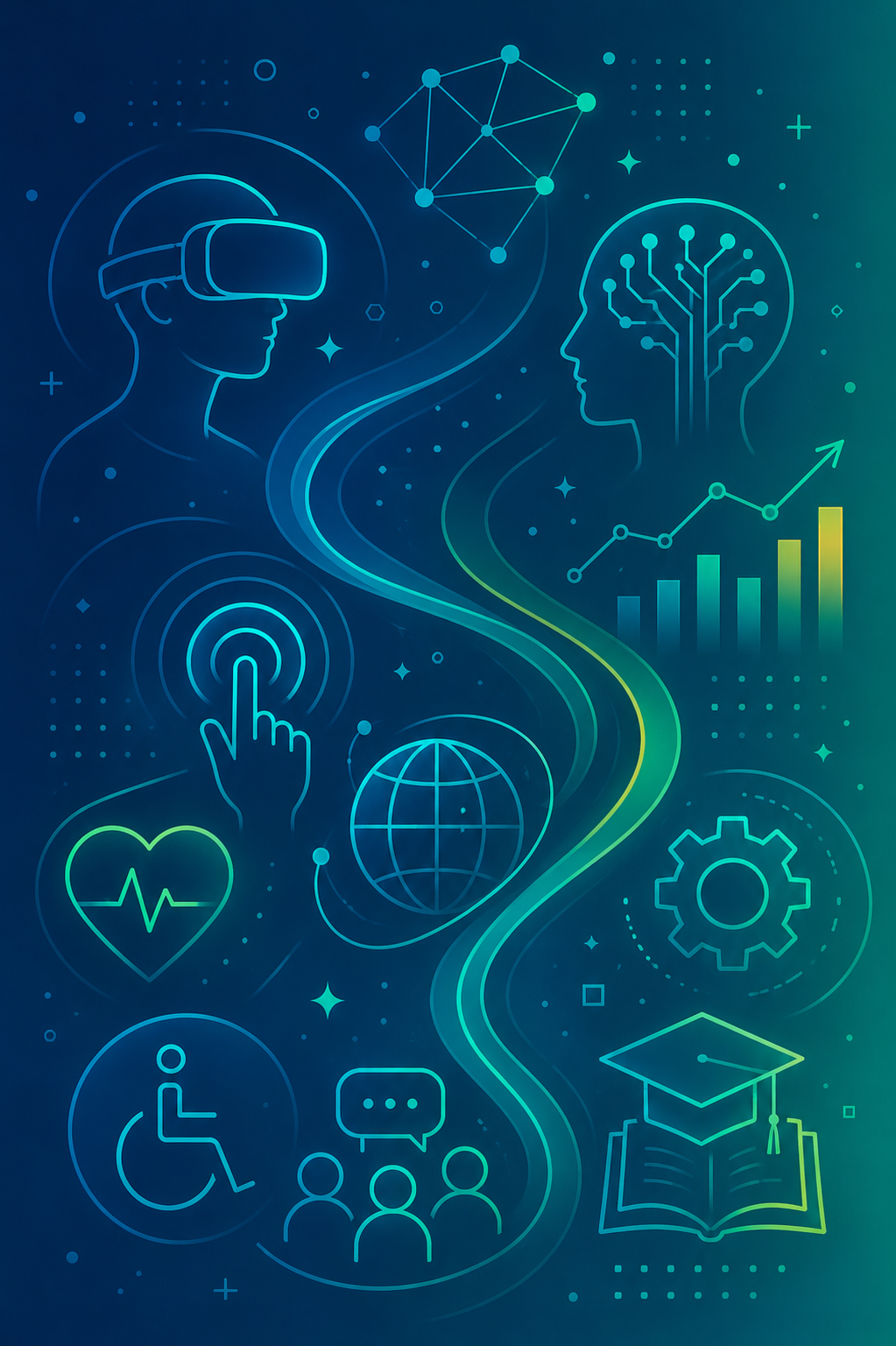
Integration of AI and Neuromotor Interfaces for Adaptive Systems
کلمات کلیدی:
AI, Neuromotor Interfaces, Adaptive Systems, Machine Learning, Brain-Computer Interfaces, Neural Networks, Human-Computer Interactionچکیده
The integration of artificial intelligence (AI) with neuromotor interfaces represents a groundbreaking advancement in adaptive system technologies. This paper explores the synergistic potential of combining AI algorithms with neuromotor interfaces to enhance the capabilities of adaptive systems across various applications. By leveraging the advanced computational power of AI, neuromotor interfaces can be optimized for greater precision, adaptability, and real-time responsiveness, significantly improving user interaction and control.
Neuromotor interfaces have traditionally focused on translating neural signals into actionable commands for controlling external devices. However, the static nature of traditional models limits their adaptability to dynamic environments and individual user variability. The incorporation of AI introduces a layer of adaptability and learning, enabling systems to continuously refine their performance based on real-time feedback and historical data. This adaptability is particularly crucial for applications in rehabilitation and assistive technologies, where user needs and conditions can vary significantly over time.
The paper discusses several AI methodologies, including machine learning and deep learning, as crucial components in processing complex neural signals. These methodologies facilitate the decoding of neural activities with higher accuracy and efficiency, allowing for more nuanced and sophisticated control over connected devices. The integration of these technologies not only enhances the user experience but also broadens the scope of potential applications, ranging from medical prosthetics to advanced human-computer interaction systems.
This study highlights key advancements in the field and outlines the challenges that remain in achieving seamless integration. These challenges include ensuring reliable signal acquisition, enhancing the robustness of AI models against noise, and addressing ethical considerations in data usage and privacy. Ultimately, the fusion of AI with neuromotor interfaces promises to revolutionize adaptive systems, paving the way for more intelligent, responsive, and personalized solutions in diverse domains.